20 New Tips For Picking Anti-Termite Services In Jakarta
Wiki Article
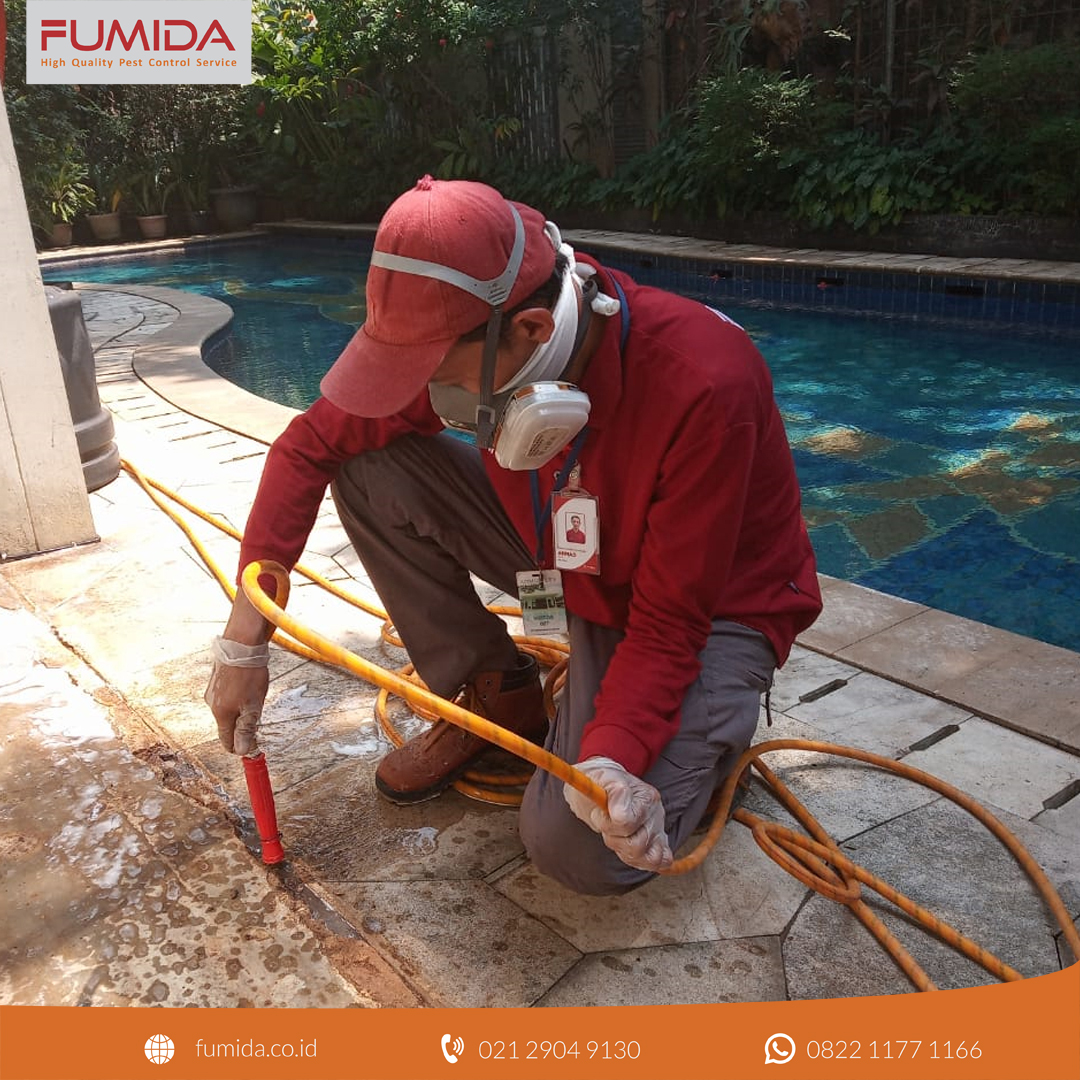
Post-Construction Termite Barrier In Jakarta
The majority of Jakartans believe that termite barriers should be put in place prior to installing concrete or building walls. It's not the case. Property owners are convinced that once the slab is cast, the only choice is chemical trenching--repeated applications of terminicide that degrade in Jakarta's alkaline soils as well as high humidity. This assumption is no longer valid, as retrofit physical barriers can be constructed with the perimeter excavation method and are mechanically attached to foundations already in place. The barriers that are used after construction aren't inferior to the barriers used prior to construction. They are two different types of technology with different performance profiles. Jakarta anti termite solutions that cannot offer both are barred from the fastest-growing segment on the urban insect control market.
1. Physical Barriers Exist, and can be modified
Installing a slow-release Termiticide Membrane or stainless steel mesh, or bonded sand may be accomplished against foundations already in place. This requires excavation of the foundation walls, degrading of soil, installation and mechanical fixing of the barrier. It is disruptive, expensive and is permanent. Jakarta exterminators who claim that the only way to get rid of them is to inject liquids annually are not presenting the latest technology.
2. Liquid Barriers Degrade; Physical Barriers Do Not
Termiticides applied to soil in Jakarta are prone to rapid hydrolysis. The high temperatures, the alkaline pH and heavy rainfall during the wet season decrease the half-life of active ingredient by months. Physical barriers, like mesh, sheeting, and graded stones, do not diminish in value. Their performance in excluding clients for the tenth year is comparable to year one. Chemical barriers are less effective for clients who will be paying more for the assurance of permanence.
3. The Unadvertised Advantage of Moisture Control
The sheet of polymer barrier also wards off termites and suppresses capillary moist migration from soil to bricks. Drier foundations mean drier timber. Drier timber is undetectable timber. Termites will not attack wood they can't see. Anti-termite services selling physical retrofits offer two treatments for the price of one. They should include both in their client proposals.
4. Partial Perimeter Is Not a Barrier
Jakarta's dense urbanization (party walls, constructions adjacent to each other and roads that are paved) frequently restricts excavation to the entire perimeter. Anti-termite services that claim to offer partial installations under the heading "barriers," are misleading regarding the science of subterranean access. Termites can walk around the open areas. The correct term is "partial circumference intervention" with documented gaps of exclusion. The homeowners must be aware of the security gaps.
5. Bekasi Adoption Signal
Jakarta and the extended metropolitan region have already incorporated physical retrofit technology. The first adopters in Bekasi are not located in Menteng or Kebayoran and are located in Bekasi where greenfield developments have created open areas and coordinated sequencing. Jakarta exterminators, who monitor only central Jakarta bids, are missing out on the trend. Physical barriers are erected in cities that are secondary before heading north.
6. Architect Specification Trumps Contractor Substitution
Emporio Architect and similar firms now specify physical barrier systems in the renovation documents. The contractor is accountable for providing anti-termite services within this value stream, but they do not control the requirements. Sales efforts of pest control firms must be redirected away from homeowners to engineering firms and architects. Transaction economics is the selling of an owner of a retrofit property. Annuity economics has entered the specifications of an architect.
7. The Additive-Depletion Curve Favors Synthesis Infused
Liquid termiticides applied to soil are degraded immediately following application. Polymer sheets barriers contain additives which were infused into the matrix at manufacture. The depletion happens along the exposed edge following the pattern of diffusion measured over years. Physical barriers come with an assurance that is practical and reliable. Five-year warranties on liquid barriers is speculation.
8. It is the access to excavation that determines its feasibility.
Access to the bucket is the only barrier to post-construction but not budget. Mini-excavators require around 60 centimeters of clear space close to the foundation. Geometrically excluded properties are those with zero lot-line constructions. Shared driveways and hardscapes that are installed close to walls. Anti-termite services must conduct access audits before making a quote, and not while mobilizing.
9. ESG Reporting generates commercial demand
Indonesian companies with sustainability policies, for example multinational tenants and green building applicants, can now track carbon emissions that are embedded into buildings. Broadcast spraying using liquid termiticides is known as a cause CO2 emissions. Physical barrier installation--one-time excavation, mechanical fastening, zero recurrent chemical application--qualifies as emissions reduction. Jakarta exterminators who provide services for corporate customers need to provide carbon-equivalent disclosure. Otherwise, they risk losing their bids.
10. Retrofit Barriers Need Different Warranties
Pre-construction barrier are guaranteed against termites gaining access to the barrier. Post-construction fences cannot offer the same protection since they do not protect the entire structure, but only the areas that are accessible. The warranty's clause should be "exclusion of the treated zone" not "protection against damage to the entire structure." Oversold protection is a common myth for homeowners. Pest control companies with detailed records of the items installed inside the house and the things that are still vulnerable can resolve more claims disputes and will retain more customers.
The final sentence of the article is:
Post-construction termite barriers Jakarta are located at the intersection of three convergent trends: documented degradation rates of termiticides applied to soil in urban settings that are tropical architecturally-driven specification of permanent physical systems; and the demand of corporations for pest control strategies that are compatible with carbon accounting frameworks. Anti-termite companies who insist on referring to post-construction termite control as chemical trenching is not protecting their market share. They are defending the risk of obsolescence. The equipment required--mini-excavators, core drills, mechanical fasteners--is capital-intensive but one-time. The required training--soil analysis, access auditing, and warranty documentation- is information and is transferable. Bekasi is the very first city in Indonesia to enter this new era of barriers. Within the next 24 hours, Jakarta will have it. Exterminators who are waiting for their clients to request it before purchasing capabilities will hit the market in about two years after early adopters. They'll be in a pricing war against established companies for physical barriers who have already installed the reference installations and have built connections with architects. The issue is not about whether to implement physical retrofit capabilities. The decision is whether to lead this market or follow it. See the best jasa anti rayap for site examples including pengendalian hama, jasa pest control, jasa pembasmi rayap, cara membasmi rayap di lemari kayu, jasa anti rayap tangerang, jasa pembasmi hama, jasa anti rayap tangerang, penyebab rayap di lemari, rayap kayu, jasa anti rayap bandung and more.
Greater Jakarta Soil Treatment Protocols To Treat Termites
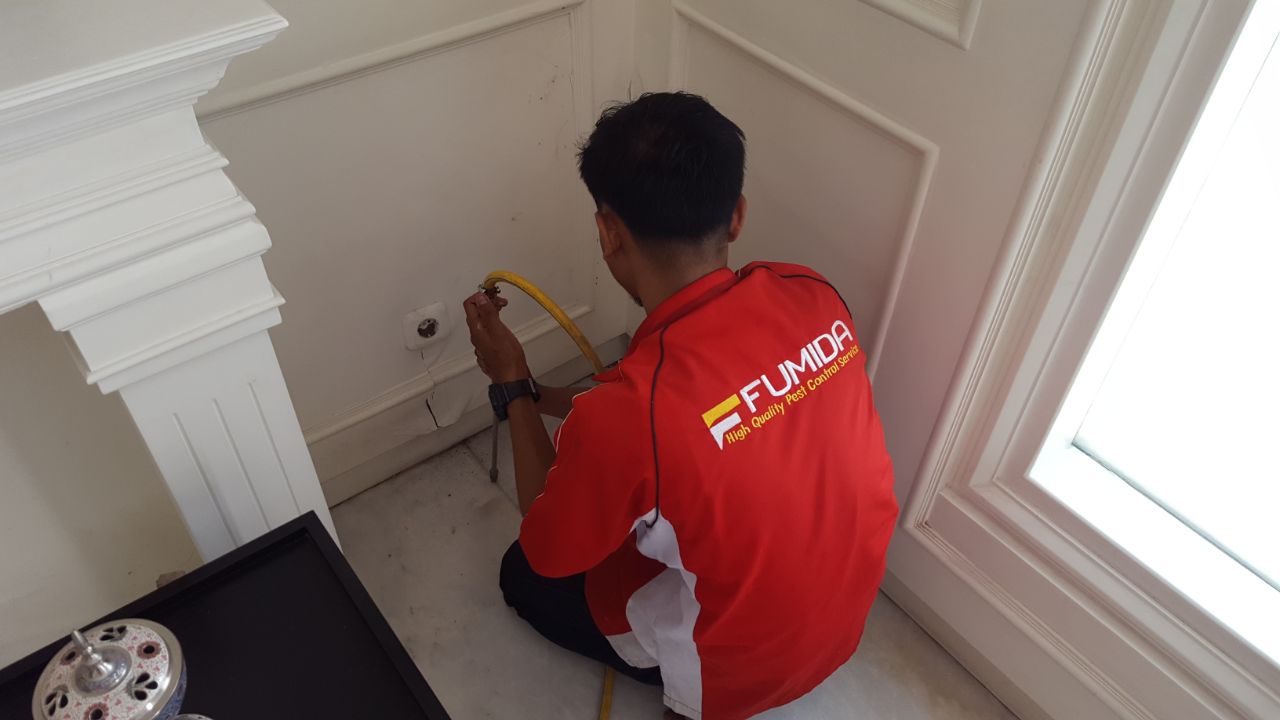
The trenches are dug. The rod is put in. The chemical is introduced. The technician then moves sixty centimeters, before repeating the process. The ritual, which is that is performed in Greater Jakarta tens of thousand of times a year, is considered to be a science that has been tested by both exterminators and homeowners. However, this is not the case. It's just a matter of tradition disguised as protocol. The subterranean soil treatment termites was created in temperate climates where the soil texture, moisture regimes and target species were different. Tranplanted onto Jakarta's silty silt clay, monsoon precipitation, and Coptotermes geostroi's habits of foraging The traditional "trench-and-drench" produces results that range from temporary suppression to complete futility. Greater Jakarta requires soil treatment methods that are adapted to Greater Jakarta's particular conditions. Ten points are the minimum for chemical treatment, which only creates invoices from termite-free treatment.
1. The Soil Texture Determines Chemical Mobility
The soil of Jakarta is mostly silty compacted mud. The particle size is small. Organic content is very low. The porosity is low. This type of substrate doesn't allow liquid termiticides to be dispersed along the radial direction, similar to loamy soils. Instead, they collect in the trenches where they migrate in preferential paths like cracks, utility channels, as well as root canals. Pesticides are making themselves look foolish if they assume a uniform distribution. After-application verification isn't a matter of trust, but requires soil sampling.
2. The placement is determined by the 300-500mm damp belt
Roof eaves guard the soil adjacent to the wall of foundation. Rainfall is minimal. It is drier than the soil in gardens. Termites are active within the belt between 300-500 millimeters from the structure. This distance permits them to reach the foundation, but they do not get any water. Soil treatment flushed against the wall can miss this belt. The drip line marks which the trench is located.
3. The half-life of hydrolysis can be measured in weeks instead of months
The process of hydrolysis breaks down imidacloprid and fipronil. Temperature and moisture boost the rate of hydrolysis. Jakarta soil temperatures range from 28-32 degrees Celsius on average in shallow depths. The majority of the time, soil moisture exceeds 20 percent during the wet season. Half-lifes of chemicals are affected by this. Bekasi has a shelf life of about 4 months of efficacy in a product labeled in Ohio as 12 months effective. The warranty must be able to reflect this. Most do not.
4. Vertical Barrier requires horizontal disruption
Termites infest the soil and foundation interface. The soil treatment can only make a vertical chemical wall in the event that it is applied at the interface. When injecting rods from the surface, it deposits chemicals at depth, however, the top 5 to 10 centimeters of the surface untreated in the event that the rods are pulled back slowly as they inject. Exterminators that pound rods to the subsoil, and then lift them up immediately treat the subsoil and leaving the topsoil untreated.
5. C-Organic content binds and inactivates
Organic matter in soil adsorbs repellent termiticides reducing their concentration for termites to absorb. The Jakarta's urban soils tend be low in organic matter, but the landscaping beds that are located near foundations often receive compost and potting mixture. These zones require more intensive soil treatment in order to overcome the organic binding. The standard label rates are based upon mineral soils that are not altered.
6. Pre-treatment Moisture Audits Are Non-Negotiable
The soil's water content of more than 22% may make a preferred habitat. Soil water levels below 10% are detrimental to foraging, and also reduce chemical uptake. Exterminators that inject terminicide before checking soil's moisture use chemical reactions to conditions that are not known. The moisture-meter cost 200 thousand dollars. Ten times the amount is devoted to the first re-treatment in case of the conditions for application are not correct.
7. The volume of the trench must be in line with the label rate, not linear meter
Indonesian soil treatment quotations typically are priced per foundation linear meter. The label instructions state the amount per square meter and per linear meter. Exterminators who quote per meter prior to making sure they have verified the width and depth of trenches are actually selling conformity documentation, not treatment. The amount of chemicals required for a 15cm by 15cm trench is half that required for a 30cm by 30cm trench. The price differential rarely reflects the fact that.
8. Rodding Versus Trenching: Species-Specific Choice
Coptotermes insperatus scavenge deeper through the top 15cm of soil. Microtermes insperatus forages deeper, and accessing water during dry times via vertical shafts. Rod injection deposits chemical at depth, intercepting Microtermes. Trenching and mixing deposit chemical on the upper side of the profile to stop the flow of Coptotermes. Species identification must precede protocol selection. Exterminators that employ the same method of soil treatment in every instance are often mismatched to Jakarta's species diversity.
9. Re-treatment Intervals Are Shorter Than Marketing Claims
Indonesian pesticides are very competitive. As a marketing tactic the warranty period has been overinflated. Three-year guarantees on soil treatment are common. Under the conditions of Jakarta, a 12- to 18-month period of exclusion is recommended. Termites bursting through in month 22 isn't an uncommon event. Homeowners follow their timetable. Exterminators retain clients who honour warranties from month 22 without disputing coverage. The ones who contest coverage lose their clients.
10. The only way to ensure quality is a soil sample after treatment
The exterminator asserts that the trench had been made to the correct depth, and the chemical was mixed at the correct concentration. The exterminator also asserts that the that the injection was carried out at the correct pressure. The homeowner is not able to provide any method to confirm. Verification is made by analyzing soil cores to find active ingredients. This service is available. It's inexpensive. Jakarta antitermite companies that commission third party soil sampling and then share the results back to their clients, are separating according to evidence. Services that reject samples can be distinguished based on the basis of faith. The market is increasingly looking for evidence.
We also have a conclusion.
Not just because they're designed for Greater Jakarta conditions, but due to their familiarity. Familiarity alone does not guarantee efficacy. In order to distribute the identical amount of chemicals the city’s compacted silty mud needs a larger trench. Due to its monsoon weather the hydrolysis timeframes get compressed. This leads to shorter warranty intervals and regular retreatment cycles. The species mix needs differentiating protocols based by pre-treatment identification. The landscape planting beds will require an increase in organic carbon rates as well as adjustments to the bed. The foundation geometries of the company require that trenches be placed near the dripline, not along the wall. Jakarta anti-termite companies that perform soil treatments based on manufacturer labels for Ohio Texas Osaka or guarantee results that are not optimal are at risk. These outcomes are not the fault of the manufacturers, but rather the exterminator that chose not to adapt to the local climate. The adaptation process is contingent on investments in soil moisture meters, the connections with analytical laboratories and the training of technicians in species identification. In a mature marketplace, these investments will not be a choice. This is the fee to be a part of an area that has matured. Homeowners in Greater Jakarta can differentiate between exterminators who pay this fee and those who pay it in other ways. They can determine the difference by comparing the proposals of both exterminators. Take a look at the most popular anti rayap for site recommendations including cara membasmi rayap di lemari kayu, jasa pengendalian hama, lemari anti rayap, anti rayap, cara membasmi rayap di lemari, cara membasmi rayap kayu, jasa anti rayap, basmi rayap, jasa rayap, bahan lemari anti rayap and more.